Documento Mês – Fundo Bibliográfico
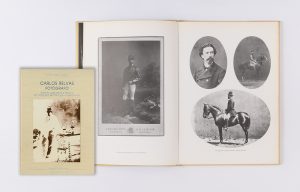
Sabia que Carlos Relvas é considerado a grande figura da fotografia portuguesa oitocentista?
António Pedro Vicente traça um retrato aprofundado da vida e da obra daquele que é considerado a figura mais emblemática da fotografia portuguesa da segunda metade do século XIX. Nascido na Golegã, Carlos Relvas (1838-1894) pertencia a uma família abastada, circunstância que lhe permitiu dedicar-se à fotografia com meios técnicos excecionais para a época. Este enquadramento favoreceu um percurso marcado pela inovação técnica e por uma clara intenção artística.
Num período em que começa a consolidar-se em Portugal uma cultura fotográfica amadora, Carlos Relvas destacou-se de forma singular. Iniciou-se na fotografia por volta de 1862 e alcançou rapidamente reconhecimento pela excelência dos seus retratos, pela atenção minuciosa ao detalhe e pelo domínio refinado da luz. As suas viagens pela Europa permitiram-lhe visitar ateliers de referência, contactar com fabricantes especializados e adquirir equipamentos, produtos químicos e manuais técnicos de vanguarda. Experimentou praticamente todos os processos fotográficos então disponíveis e distinguiu-se especialmente na fototipia, técnica que viria a exercer grande influência na imprensa ilustrada.
Reconhecido em exposições nacionais e internacionais, Carlos Relvas tornou-se o mais prestigiado fotógrafo português do século XIX e uma figura decisiva para a afirmação da fotografia como arte em Portugal.
Did you know that Carlos Relvas is regarded as the foremost figure of nineteenth-century Portuguese photography?
António Pedro Vicente offers an in-depth portrait of the life and work of the man considered the most emblematic figure of Portuguese photography in the second half of the nineteenth century. Born in Golegã, Carlos Relvas (1838–1894) came from a wealthy family, a circumstance that allowed him to devote himself to photography with technical resources that were exceptional for the time. This environment fostered a career marked by technical innovation and a clear artistic intent.
At a time when an amateur photographic culture was beginning to take shape in Portugal, Carlos Relvas distinguished himself in a singular way. He began practicing photography around 1862 and quickly gained recognition for the excellence of his portraits, his meticulous attention to detail, and his refined command of light. His travels throughout Europe enabled him to visit leading studios, engage with specialized manufacturers, and acquire cutting-edge equipment, chemical products, and technical manuals. He experimented with virtually every photographic process then available and became particularly renowned for his work in phototypy, a technique that would exert great influence on the illustrated press.
Acclaimed at national and international exhibitions, Carlos Relvas became the most prestigious Portuguese photographer of the nineteenth century and a decisive figure in establishing photography as an art form in Portugal.
VICENTE, António Pedro – Carlos Relvas, fotógrafo (1838-1894): contribuição para a história da fotografia em Portugal no século XIX. Lisboa: Imp. Nac.-Casa da Moeda, imp. 1984. (coleção arte e artistas). D.L. 6429/84.